Americans Want to Keep Cash: Study Shows Strong Support
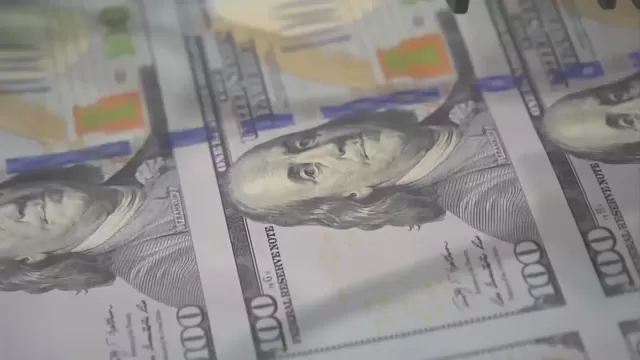
Americans overwhelmingly support maintaining cash as a payment option, despite the rise of digital alternatives. A recent study reveals that a significant majority of consumers want to preserve the ability to use paper and coin currency and back laws that would require most U.S. businesses to accept it. This sentiment arises as an increasing number of businesses opt for cashless operations or implement restrictions on cash acceptance.
Consumers are voicing their desire to keep cash available, citing reasons such as privacy concerns and the financial exclusion of the unbanked and underbanked populations who lack access to credit and debit cards. The Siena Research Institute conducted a study of 5,000 Americans, finding that 85% had used cash for a purchase within the past month. While debit cards emerged as the preferred payment method for 35% of respondents, followed by cash and credit cards (both at 24%), a strong 84% opposed the nation moving towards a cashless society. The study was commissioned by the Payment Choice Coalition, an organization advocating for the continued use of cash.
Cash: A Vital Tool in Emergencies and Beyond
Advocates emphasize that cash remains crucial, particularly during unforeseen circumstances. Jeff Thinnes, representing the Payment Choice Coalition, stated that cash is a valuable and enduring form of payment. Support for cash usage is bipartisan and spans across income levels. Some individuals value cash for its privacy benefits, while others highlight the 25 million American households that are unbanked or underbanked and therefore rely on cash for transactions.
Economist Jay Zagorsky of Boston University's Questrom School of Business further elaborates on cash's importance during emergencies. He points out that natural disasters or national crises can disable electrical and communication grids, rendering electronic payment systems inoperable. Zagorsky warns that in the event of an attack, the banking system would likely be an initial target. He suggests that future conflicts could be cyber-based, potentially cutting off access to electronic funds, leaving individuals unable to spend money even if they possess wealth. While Zagorsky advocates for cash, he also encourages continued use of electronic payment methods but recommends using cash at least weekly to maintain its circulation within the economy.
Survey Highlights Consumer Perceptions of Cash
The Siena study provided valuable insights into how Americans perceive cash:
- Privacy: A significant 92% of respondents believe that paying with cash offers superior privacy compared to digital or card payments.
- Spending Tracking: Interestingly, 75% felt it was easier to track spending when using cards or payment apps. However, a majority (70%) also indicated that using physical cash helps them stay within a budget.
- Reasons for Reduced Cash Use: The primary reasons cited for using less cash include the convenience of cards or mobile payments (86%), reduced in-person shopping (62%), not carrying cash regularly (60%), and businesses not accepting cash (30%).
- Mandatory Acceptance: Nearly six in 10 survey respondents (59%) believe all businesses, regardless of size, should be required to accept cash.
Legislative Efforts to Preserve Cash Transactions
While various states and cities have implemented cashless bans, their inconsistent nature has created a complex landscape. The Payment Choice Coalition supports the Payment Choice Act, with versions in both the U.S. House and Senate. This legislation aims to mandate that most businesses accept cash for in-person payments up to $500. A substantial 85% of survey respondents indicated their support for a law requiring most brick-and-mortar stores to accept cash.
Zagorsky, who is not affiliated with the Payment Choice Coalition, views the Payment Choice Act as a positive step but notes its current limitations, primarily applying to retail establishments. He argues that it excludes other crucial sectors like restaurants and medical offices where consumers may wish to use cash. The proposed legislation also includes provisions for reverse ATMs, which allow users to convert cash into electronic cards. However, Zagorsky points out that the bill does not specify the convenient placement of these reverse ATMs for consumers.
The Trajectory Towards a Cashless Society?
The trend of businesses refusing cash is growing, with notable examples including Major League Baseball stadiums and many professional sports arenas. The survey indicated that 29% of respondents had encountered businesses that declined to accept paper and coin currency, spanning restaurants, retail stores, and entertainment venues. Despite this trend, 59% of respondents firmly believe all businesses should be mandated to accept cash.
Data from the Federal Reserve Financial Services' 2025 Diary of Consumer Payment Choice shows a decline in the use of cash and personal checks in recent years, while credit and debit card payments have increased. For the past four years, cash has held the position of the third most-used payment method, accounting for 14% of transactions in 2024, trailing credit cards (35%) and debit cards (30%). Personal checks accounted for 3% of usage. Another recent survey by Empower found that 18% of people use cash daily, with one in five using it only a few times a year. Furthermore, 37% of respondents believe each successive generation relies less on cash.
Despite these shifts, Thinnes asserts that the survey results underscore the continued importance of cash to consumers. He concludes that a majority of Americans do not foresee cash disappearing from circulation.