Marie Antoinette: Fashion, Myth, and Modern Muse
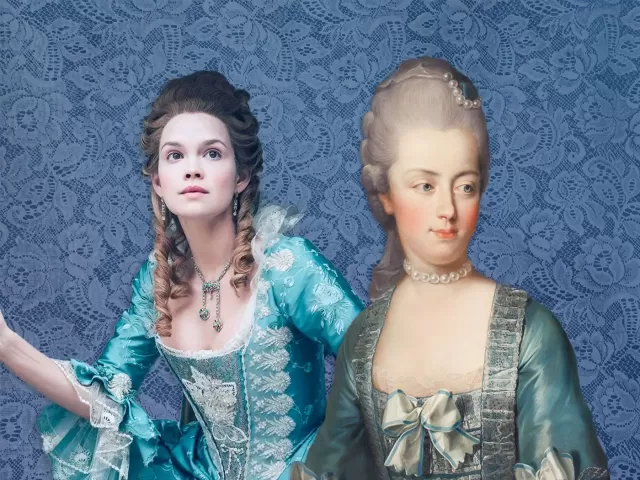
Marie Antoinette is often remembered as a caricature: the frivolous queen who bankrupted France with her taste for diamonds and supposedly uttered the infamous phrase, "let them eat cake." While historical reality is more complex—her spending was a fraction of the nation's debt and the cake quote is a myth—the optics were damning. Yet, the very opulence that hastened her downfall has also secured her immortality, making her one of history's most glamorous and controversial queens, rivaled only by Cleopatra.
Her story resonates powerfully today in what is called a "new gilded age," marked by a collision between steepening inequality and the ostentatious lifestyles of the global elite. Her trajectory from national sweetheart to a figure of public hatred mirrors the rollercoaster of modern celebrity culture, which loves to build up icons only to tear them down. This is why Marie Antoinette remains a potent, if often insulting, comparison for prominent women. Diana, Princess of Wales, was compared to her for the merciless press pursuit both endured. Hillary Clinton was branded a Marie Antoinette to paint her as elitist, as were Melania Trump for her detachment and the Duchess of Sussex for appearing out of touch.
Born an Austrian princess and married into the French court at 14, Marie Antoinette was an outsider. Her image as a "Versailles Barbie" belies the strategy behind her style. In a court where queens were expected to be conventional, the childless Marie Antoinette leaned into fashion to build her profile and assert her power. With her dressmaker Rose Bertin, she established trends and used her wardrobe as a defiant statement of feminine influence. However, this high-profile extravagance, including her model farm Hameau de la Reine where she cosplayed as a milkmaid, backfired spectacularly.
As France's financial crisis deepened and the price of bread soared, her lavish spending made her a lightning rod for public fury, earning her the nickname "Madame Deficit." The perception of her opulence, regardless of its true scale, sealed her fate. But even on her way to the scaffold, she understood the power of fashion. After months of wearing black in mourning for her husband, on the morning of her execution, she dressed in a pristine white ensemble—a final, silent protest of her innocence.
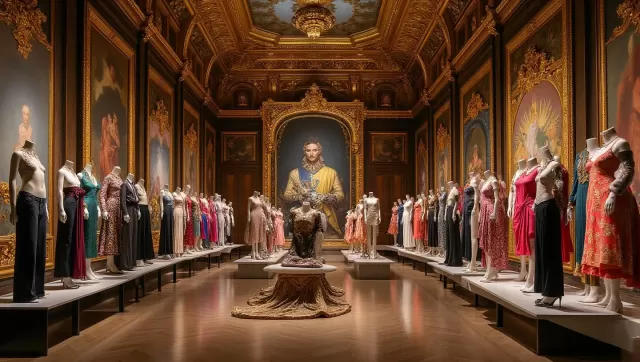
Nearly two centuries later, Marie Antoinette is experiencing a cultural renaissance, the subject of a new V&A exhibition sponsored by Manolo Blahnik. Her second coming began in popular culture with Madonna's 1990 "Vogue" performance and was solidified by Sofia Coppola's 2006 film, which reframed her as a sympathetic, cool, and tragic teen queen for a new generation. Coppola's vision, blending Rococo aesthetics with a modern sensibility, has made the queen a perennial on fashion mood boards.
Today, designers like Jacquemus and Dior continue to draw inspiration from her life and style. Her name and image still command immense value; a pearl and diamond pendant she once owned sold for $36 million in 2018. Ultimately, Marie Antoinette's story is a profound paradox. Fashion was a tool she used to claim power, a weapon used against her by her enemies, and a key factor in her execution. Yet, it is also what has made her an icon whose name lives forever. As her mother prophetically wrote on the day she left for France, "all eyes will be on you." They still are.