Amy Levy: Rediscovered Victorian Literary Enigma
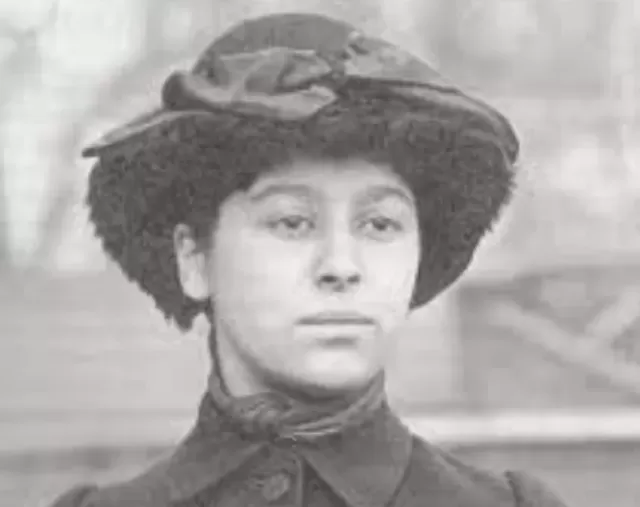
For over a century, the compelling voice of Amy Levy, a writer once lauded as a genius by Oscar Wilde, remained largely in the shadows. Now, a significant discovery by the University of Cambridge promises to bring this pioneering Victorian author back into the spotlight, offering a deeper understanding of her groundbreaking explorations into women's independence, Jewish identity, and same-sex desire.
The University has acquired and meticulously unsealed Levy's personal archive, a treasure trove of correspondence, manuscript drafts, photographic mementos, and intimate diary entries. This substantial collection is poised to ignite a wave of new scholarly research, shedding light on the multifaceted aspects of her life, her literary contributions, and her personal struggles.
"It's a rare occurrence in contemporary times to uncover such a comprehensive collection of a 19th-century author's papers," remarked John Wells, senior archivist at the Cambridge University Library. "We recognized the immense value of this opportunity to make her archive accessible within the very institution where she pursued her studies and frequented in the twilight of her life."
Born in 1861 into a middle-class Jewish family in London, Amy Levy made history as only the second Jewish woman to attend Newnham College at Cambridge in 1879, a testament to her intellectual drive and the evolving landscape of women's education.
Her literary output was prolific, encompassing three poetry collections, three novels—including the notable Reuben Sachs and The Romance of a Shop—alongside a myriad of essays and insightful articles for the Jewish Chronicle. Tragically, Levy died by suicide in 1889 at the tender age of 27. Despite her young age, her contemporaries recognized her exceptional talent. Oscar Wilde himself penned her obituary, celebrating the "sincerity, directness, and melancholy" that permeated her writing.
Until its acquisition by the University, Levy's archive was held by a private entity. The newly accessible materials paint a vivid picture of the intellectual currents and social circles that influenced her work, from the burgeoning New Woman movement advocating for female autonomy to the complex Victorian debates surrounding race science, artistic expression, and the very nature of identity.
Linda K. Hughes, a distinguished professor emerita of English and literature at Texas Christian University, who is currently engaged in a book project focused on Levy, expressed her conviction that these documents will not only revolutionize academic discourse but also resonate with a broader audience.
"Amy's poetry has stayed with me profoundly since I first encountered it decades ago," Hughes shared. "She was not just a gifted and evocative writer, but a figure of immense complexity. While she proudly embraced her Jewish heritage, she also identified as an atheist. Her interactions with men were often amicable, yet she was undeniably a queer woman."
Hughes further illuminated Levy's vibrant social life, noting her strong connections at Newnham and in her later years, particularly through her friendship with Vernon Lee (the pseudonym of Violet Paget). Lee, a well-connected figure, introduced Levy into a circle that included Wilde himself. It was within this milieu that Levy developed a deep affection for Lee, a love that, sadly, went unreciprocated.
"When Levy submitted a one-page manuscript to Wilde for his publication, The Woman's World," Hughes recounted, "he was utterly captivated by the story, declaring Levy a girl of genius."
Scholars now believe Levy's literary legacy speaks with remarkable prescience to contemporary discussions on feminism, LGBTQ+ literature, and Jewish identity, anticipating dialogues that would unfold long after her passing.
"Her ahead-of-her-time perspective may have contributed to her struggle to find a definitive place in her era," Hughes suggested. "She grappled with her queer identity and navigating a society deeply rooted in heteronormativity. Marriage was not a viable path for her, nor was a conventional career, such as teaching, which she abandoned to pursue writing full-time."
Levy has long been a figure of fascination for scholars of Jewish women and their history. "In today's world," Hughes observed, "especially in the wake of the global pandemic, with so many young people experiencing depression, anxiety, and mental health challenges, understanding Levy's life and work could offer both insight and solace to a wider public."
The archive includes Levy's 1889 appointment diary, which offers a poignant and increasingly sparse account of her final months leading up to her death from carbon monoxide inhalation. A heart-wrenching final entry, penned the day before her passing, simply reads: "Alone at home all day." Yet, Hughes emphasized that Levy's life was, in many respects, "rich, full, and exciting."
"Her writings reveal a capacity for humor at times," Hughes noted. "She contended with a confluence of significant challenges, including debilitating neuralgia. Her progressive hearing loss contributed to social alienation and isolation. And she also battled with depression."
"While lasting happiness eluded her, she steadfastly championed the fundamental human right to joy, even ecstasy."