Echoes of Revolution: Journeys That Reshaped the 20th Century
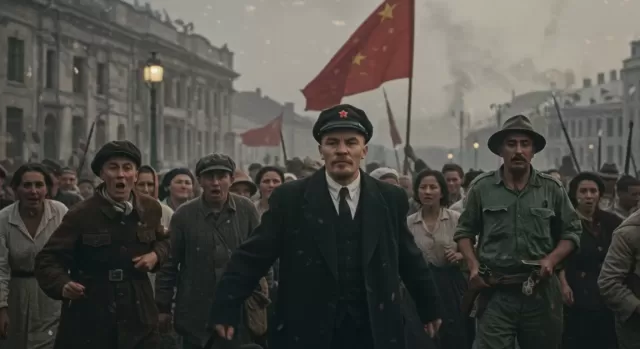
Simon Hall's new book, "Three Revolutions: Russia, China, Cuba and the Epic Journeys that Changed the World," explores pivotal moments in history through the lens of revolution. It's a fascinating exploration not just of political upheaval, but of the individuals caught within its whirlwind. The book draws parallels between the Russian Revolution, the Chinese Revolution, and the Cuban Revolution, providing a comparative study of societal transformation.
The book pairs revolutionary leaders – Lenin, Mao, Castro – with the American journalists who chronicled their rise: John Reed, Edgar Snow, and Herbert Matthews. This approach offers a double perspective, balancing the actions of those who instigated change with the observations of those who bore witness to it. Hall crafts narratives brimming with historical context and vivid imagery.
Hall focuses on key "journeys" that defined each revolution. For Lenin, it was his return from exile to Russia in 1917, a journey that ignited the Bolshevik cause. For Mao, it was the arduous Long March, a strategic retreat that solidified his leadership. For Castro, it was the ill-fated voyage aboard the Granma, which marked the beginning of his guerrilla campaign in Cuba.
While the overview of the political machinations may feel somewhat familiar, the strength of the book lies in the portrayal of the journalists involved. John Reed, the privileged American who found himself swept up in the fervor of the Russian Revolution, offers a visceral account of the era. Edgar Snow, the midwesterner who gained rare access to Mao's inner circle, delivered an early glimpse into the heart of Chinese communism. Herbert Matthews, the New York Times reporter, helped sway public opinion regarding Fidel Castro's initial rise to power.
The book acknowledges that the lens through which these journalists viewed events was subjective, and occasionally prone to romanticism. Snow and Matthews, in particular, were accused of a naive portrayal of their subjects. The book raises questions about objectivity and the role of the journalist as both observer and participant.
Ultimately, "Three Revolutions" is more adept at storytelling than profound historical analysis. Hall creates a tapestry of compelling anecdotes and descriptive passages that bring these pivotal periods to life. By focusing on these key characters and their transformative journeys, the book presents a compelling portrait of upheaval and the human condition.