The O'Dwyers: A Tale of Two Brothers, Purity, and Pragmatism in 20th Century America
The eternal struggle between unwavering ideals and practical compromise shapes our lives, our politics, and even our personal relationships. It's a question of how best to navigate a complex world – do you hold firm to your principles, or bend to the demands of reality to achieve tangible results?
A new biography, "An Irish Passion for Justice: The Life of Rebel New York Attorney Paul O'Dwyer," explores this dichotomy through the lives of two remarkable brothers, Paul and William O'Dwyer, Irish immigrants who left an indelible mark on 20th-century America.
Paul, the younger brother, was a fierce advocate for the underdog, a champion of civil rights, and a tireless defender of the marginalized. He fought for Irish independence, stood with Black Americans against segregation, supported the LGBTQ+ community during the AIDS crisis, and championed the rights of coal miners and even, at one point, the people of Iran.
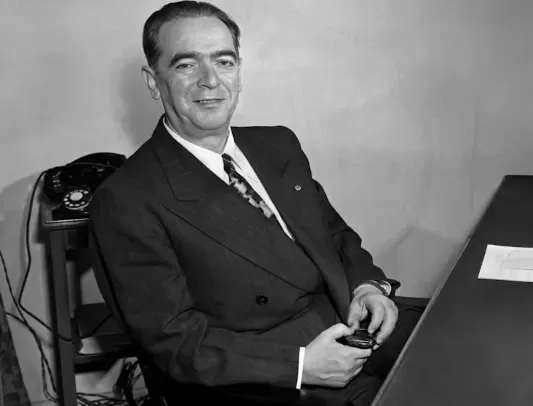
William, the elder brother, embraced the pragmatic path. He rose through the ranks of New York City's political machine, ultimately becoming mayor, overseeing significant infrastructure projects and shaping the city's post-war landscape. But his career was also shadowed by allegations of corruption, ultimately leading to his downfall.
The biography delves into the complex relationship between these two men, highlighting their contrasting approaches and the tensions that arose from their differing philosophies. It's a story of loyalty, ambition, and the enduring debate over the best way to effect change.
Paul O'Dwyer was a constant presence on the front lines of social justice movements. He was in Mississippi, supporting Fannie Lou Hamer's fight for voting rights. He was in Chicago, confronting police brutality during the anti-war protests. He was in San Antonio, working to free suspected IRA members. And he was even advising Bill Clinton on Northern Ireland, urging a path towards peace.
His journey began in humble circumstances, growing up in a small village in County Mayo, Ireland. He was brought to New York by his older brothers, where he encountered William, a man of considerable charisma and ambition. William guided Paul towards a career in law, but their paths soon diverged, with Paul choosing a more radical and challenging route.
The brothers' contrasting careers highlight the complexities of justice and the different ways to serve the public good. William, as district attorney, prosecuted criminals, while Paul defended those accused of heinous crimes, even those facing the death penalty. The contrast was made even starker when their brother Frank was murdered, and his killer was sent to the electric chair.
Despite his unwavering principles, Paul O'Dwyer recognized the need for dialogue and compromise. While a staunch supporter of Irish unity, he refused to condemn violence from either side of the conflict in Northern Ireland, seeking common ground among those divided by hate. He even reached out to a notorious anti-Catholic figure in an attempt to unite the poor of Belfast against their shared economic struggles.
While William reached the pinnacle of political power, Paul's electoral success was more limited. He served as city council president but lost bids for mayor, Congress, and the Senate. Yet, his influence extended far beyond his official positions, shaping public discourse and inspiring countless others to fight for justice.
In an era of increasing polarization, the O'Dwyer story offers valuable lessons. It reminds us that progress requires both the visionary idealism of a Paul O'Dwyer and the practical skills of a William O'Dwyer. To build a better world, we need both those who strive for perfection and those who are willing to make the necessary compromises to achieve meaningful change.
Ultimately, the O'Dwyer brothers represent two essential aspects of the human condition: the desire to create a more just world and the ability to navigate the messy realities of power and politics. It's a story that resonates deeply in our current moment, prompting us to consider how we can best bridge divides and build a more equitable future.